
Learning Wild: Why Nature May Be the Missing Classroom of the 21st Century
Learning Wild: Why Nature May Be the Missing Classroom of the 21st Century
I still remember the moment my colleague and I realised we were lost.
Around us stood a group of children aged six to ten. Overnight, forty centimetres of fresh snow had transformed the forest into a white wilderness. It was the last day before the winter break, and we were on our annual school hike. Our music teacher, who also happened to be a ski instructor, had set off ahead with part of the group on skis. Another teacher and I followed behind with the slower walkers, helping children who stopped every few minutes to marvel at the untouched snow.
Some of them had never experienced a snowy forest before.
The landscape was magical. No footprints. No tracks. No signs of human activity. Just silence, snow and wonder.
Then we reached a crossroads.
We could no longer see the rest of the group.
One very confident child assured us she had seen the others take a particular path. We trusted her. It turned out to be the wrong direction.
What followed was an additional sixty minutes of walking through deep snow with the children who needed the most support. They were tired. They were cold. They wanted to stop. But there were no roads, no cafés and no shortcuts. The only option was to continue.
Eventually, with a combination of instinct, teamwork, mobile phones and Google Maps, we found our way back.
Nobody complained.
Nobody gave up.
And everyone made it.
Years later, I rarely remember the worksheets my students completed. I do remember that snowy afternoon. More importantly, so do they.
Because what those children learned that day was not written into any curriculum document. They learned perseverance, collaboration, adaptability, leadership, trust and problem-solving. In other words, they learned many of the very competencies we claim to value in 21st-century education.
The irony is that these skills were not taught through a programme. They emerged naturally through a shared experience in the real world.
The Childhood We Are Creating
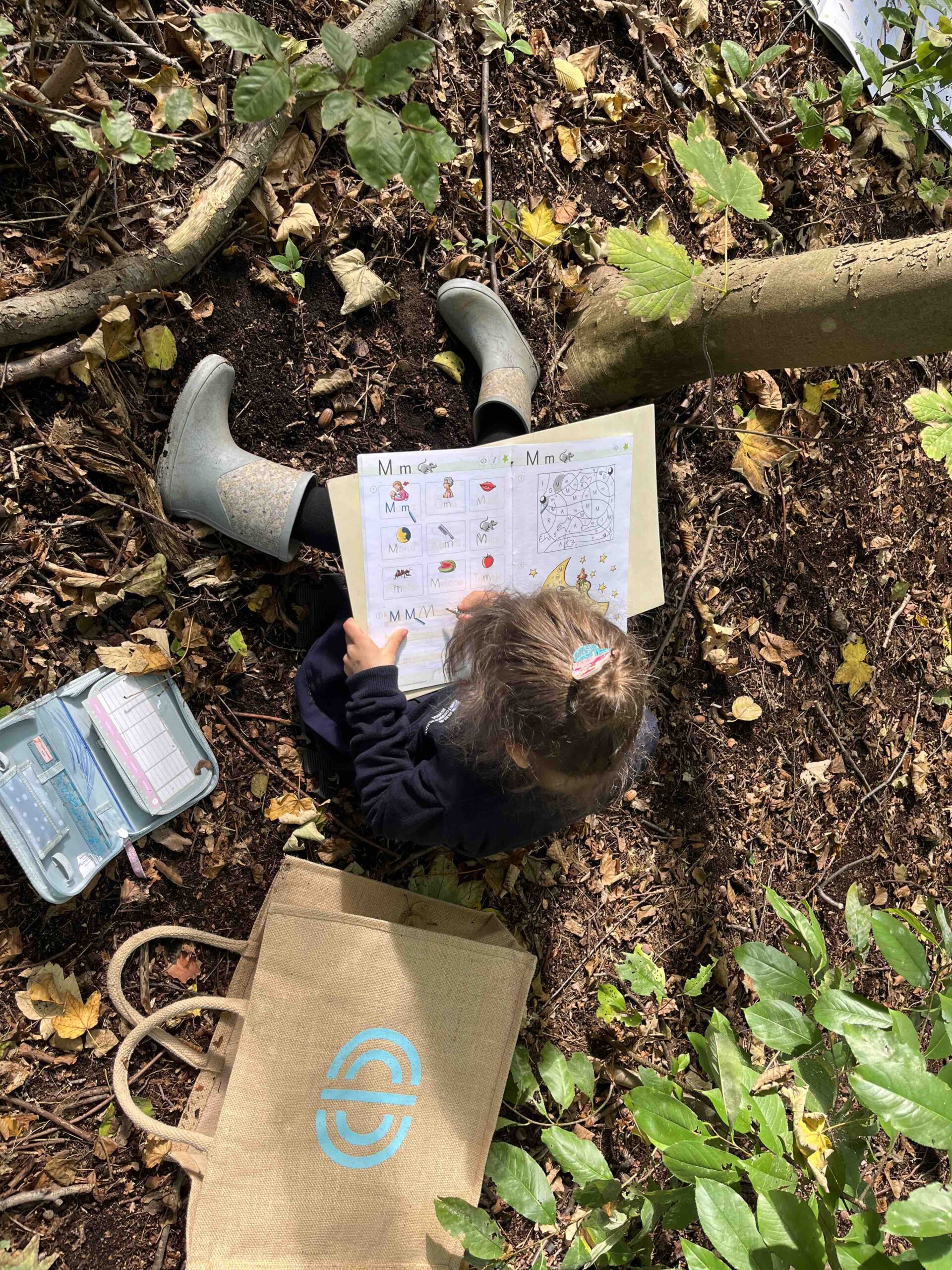 Children today are growing up in a world very different from the one many adults experienced.
Across many countries, children spend less time outdoors, move less, enjoy less independent exploration and engage with screens more than any previous generation. At the same time, educators and parents report increasing concerns about anxiety, reduced attention spans, loneliness and declining resilience.
Technology has brought extraordinary opportunities. Artificial intelligence, virtual reality and digital collaboration tools are reshaping education and society. Yet while we can bring the world into our classrooms through screens, an important question remains:
Should children’s primary experience of the world be mediated through technology? Or should it begin with direct experience?
A child who climbs a fallen tree, feels cold rain on their face, discovers a frog under a log, comforts a friend on a difficult hike or watches a favourite tree slowly die experiences something that cannot be replicated digitally.
Nature engages all senses simultaneously.
It offers beauty and challenge, freedom and responsibility, wonder and consequence.
Perhaps this is why Richard Louv (2005) argued that modern society risks creating a “nature-deficit disorder”, and why researchers across disciplines continue to explore the relationship between nature connection, wellbeing and learning.
Why Nature Matters
The evidence supporting outdoor learning has grown significantly during the past two decades.
Research synthesised by Rolf Jucker and colleagues suggests that outdoor learning can positively influence physical health, mental wellbeing, social competence, environmental attitudes and academic achievement. Studies by Louise Chawla highlight the relationship between meaningful childhood nature experiences and environmental stewardship later in life. Research by Ming Kuo demonstrates links between nature exposure, attention restoration and cognitive functioning.
Japanese research into forest bathing (Shinrin-yoku) has shown that time spent in natural environments can reduce stress and improve wellbeing. The World Health Organization continues to emphasise the importance of movement for children’s physical and mental health, while the OECD identifies collaboration, creativity, adaptability and agency as essential future competencies.
Perhaps most importantly, outdoor learning appears to support multiple dimensions of development simultaneously.
When children learn outdoors, they are not simply learning science, mathematics or literacy. They are developing relationships, confidence, physical competence, emotional regulation and a sense of connection to the living world.
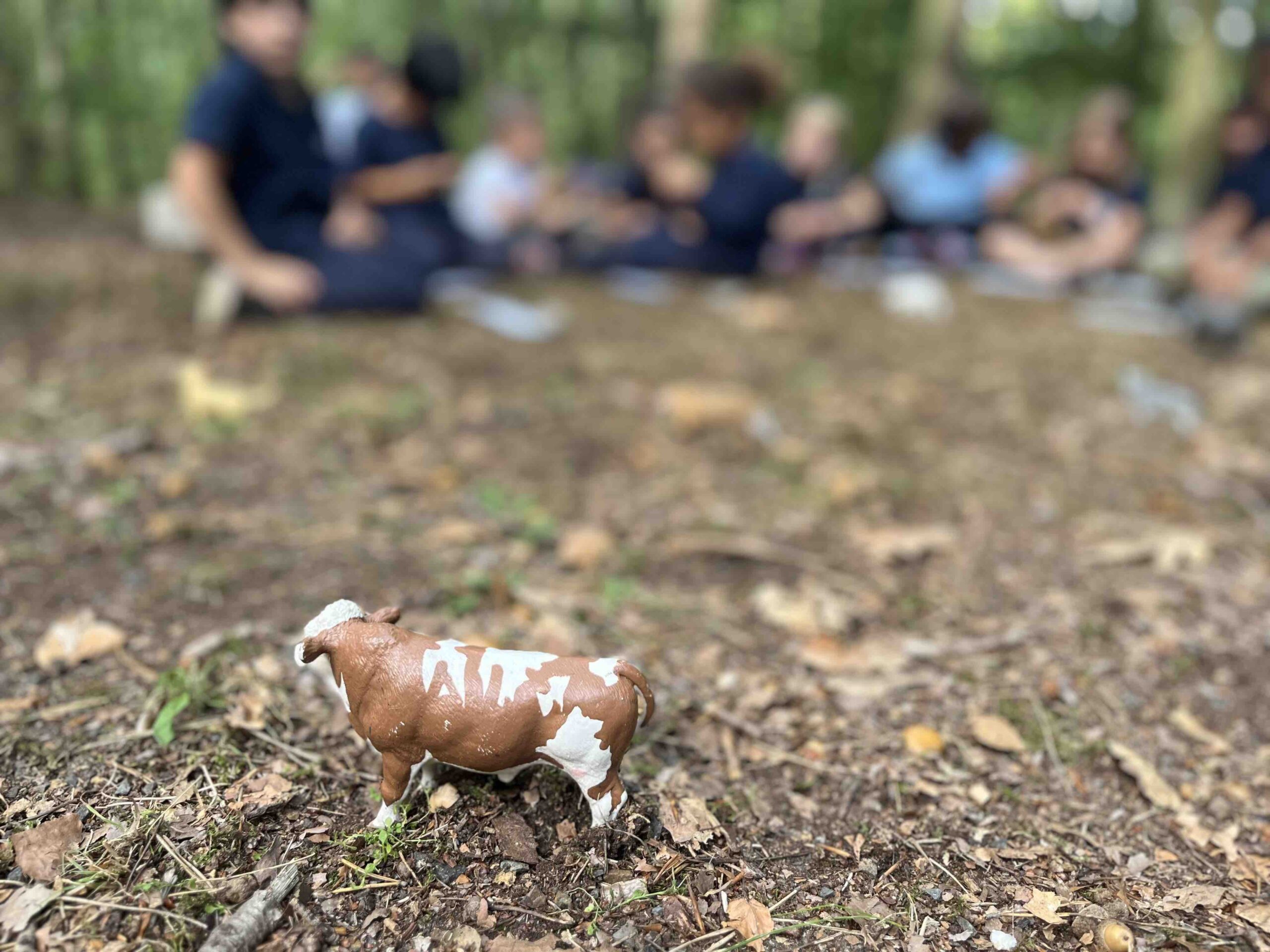
The Six Dimensions of Outdoor Learning
- Drawing on contemporary outdoor education research, six interconnected dimensions emerge repeatedly.
- Physical Health
- Children move more.
- They walk, climb, balance, carry, build and explore.
- Movement is no longer an interruption to learning. It becomes part of learning.
- Mental Health
Natural environments have been linked to reduced stress and improved wellbeing. Many educators observe that children appear calmer, more engaged and more emotionally regulated outdoors.
Nature Connectedness
Children develop relationships with places.
They return to the same trees, notice seasonal changes and develop affection for the landscapes around them.
One parent at our school recently told us:
“My child wants to show me all the places in the forest every weekend and keeps asking to go back.”
Self-Competence
Outdoor learning invites challenge.
Children discover what they can do when conditions are difficult, uncertain or unfamiliar.
Social Competence
Shared experiences create friendships.
At our Wild Campus, we often see new friendships emerge, even among adolescents who have already entered the social complexities of puberty.
Subject Competence
Outdoor learning is not separate from academic learning. It enriches it.
Learning Wild at Berlin Cosmopolitan School
At Berlin Cosmopolitan School’s Nature Campus, outdoor learning is not an occasional event. It is embedded within the educational experience.
Every week, students participate in Forest Day.
Kindergarten to Grade 4 students travel by double-decker bus, singing together as they leave the city behind. At the Nature Campus, they investigate scientific phenomena, explore mathematics through natural patterns and engage in literacy and social science learning outdoors.
Grade 5 and 6 students attend our Wild Campus. There is no school building.
Only a shelter, a composting toilet, a forest and a lake.
Students learn to build fires, swim, hike, play capture the flag, write poetry beneath trees and read while perched on fallen logs.
Outdoor learning is integrated across subjects.
In mathematics, students investigate patterns, categories and Fibonacci sequences found in nature.
In literacy, they read novels together, write stories inspired by the landscape and develop language through authentic experiences.
In water sports programmes, students learn to windsurf and navigate changing environmental conditions.
Learning becomes active, embodied and meaningful.
The Girl Who Found Her Voice
One student particularly shaped my understanding of outdoor learning.
She was quiet, shy and often appeared lost in the traditional classroom environment. Speaking in front of others felt difficult. Participating felt risky.
Yet outdoors, something changed.
She loved singing while walking through the forest. She danced along woodland paths and gradually began to engage more confidently with her peers.
Over time, she found her voice. First socially.
Then academically.
She began participating in discussions, reading aloud and eventually writing with confidence. The forest did not “fix” her.
It simply provided a different environment in which her strengths could emerge.
This experience reflects what many educators observe: outdoor learning can profoundly change the conditions under which children succeed.
The Myths That Hold Schools Back
Despite growing evidence, outdoor learning remains the exception rather than the norm. Several barriers persist.
Teachers often lack confidence because teacher education programmes rarely prepare them to teach through movement and outdoor environments.
Concerns about weather, risk and safety can discourage schools from starting.
Curriculum pressures create fears that outdoor learning will reduce academic performance.
Parents sometimes worry that outdoor learning is less rigorous than traditional classroom instruction.
Yet one misconception frustrates me more than any other:
Outdoor learning is not simply taking an indoor lesson outside. Nor is it the opposite of academic rigour.
True outdoor learning changes the relationship between learner, teacher and environment. It creates opportunities for inquiry, collaboration and authentic problem-solving that are difficult to replicate indoors.
Green and Screen
Advocates of outdoor learning are sometimes portrayed as opponents of technology. I am not one of them.
The future will undoubtedly require digital competence and technological literacy. The question is not whether children should engage with technology.
The question is whether technology should replace direct experience. Children need both green and screen.
But perhaps they need green first.
A child who has watched tadpoles grow into frogs will understand a digital simulation differently.
A child who has measured the circumference of a tree, climbed a hill or navigated through a forest will approach digital representations with richer understanding.
Technology should deepen experience, not replace it.
Reimagining School
Imagine a school in 2040.
Every child spends meaningful time learning outdoors each day. Inquiry-based learning replaces passive instruction.
Children move regularly.
Relationships matter as much as results.
Technology is integrated thoughtfully, not constantly. Class sizes allow genuine connection.
Assessment focuses on individual growth as well as achievement.
Students develop not only academic knowledge but also confidence, resilience, creativity and environmental responsibility.
Most importantly, children enjoy learning.
When I recently asked students what could improve our programme, one child answered:
“The only thing that could be better is if we never had to go inside. We should always have lessons outside.”
Perhaps we should listen more carefully.
Conclusion
The future of education will undoubtedly involve artificial intelligence, digital tools and technologies we cannot yet imagine.
But childhood remains fundamentally human.
Children still learn through movement, relationships, curiosity, exploration and play. Nature provides opportunities for all of these.
If we truly want to develop collaboration, creativity, critical thinking, resilience, wellbeing and environmental responsibility, we may need to spend less time asking how to prepare children for the future and more time considering where learning happens best.
Nature may not be the only classroom of the 21st century. But it may be the most underused one.
About the author

Katharina Ehrenfried is an educator, school leader, outdoor learning advocate and Erasmus+ Project Manager based in Berlin, Germany. She serves as Head of Primary at Berlin Cosmopolitan School, CEO of Berlin Cosmopolitan Nature School gGmbH, and Chair of the ECIS Embodied & Outdoor Learning Special Interest Group.
With nearly three decades of experience in outdoor education, Katharina is passionate about creating learning environments where children develop academic knowledge, wellbeing, resilience and 21st-century competences through movement, inquiry and authentic real-world experiences. Her work focuses on outdoor learning, inclusion, multilingual education, sustainability and learner agency, with a particular interest in how nature-based education can support both neurotypical and neurodivergent learners.
Katharina’s journey into outdoor learning began at a Waldorf school for children with disabilities, where weekly forest walks revealed the transformative power of learning in and with nature. Since then, she has worked to bring outdoor learning from the margins of education into everyday school practice. Her professional training includes Draussenschule, WWF Outdoor Teaching, Kneipp Pedagogy and Harvard Medical School’s Mindfulness and Psychotherapy in Nature programme.
Through her leadership of the Berlin Cosmopolitan School Nature Campus and international collaborations across Europe, Katharina advocates for an educational model that balances green and screen, reconnects children with the natural world and prepares young people to become capable, compassionate and responsible citizens of one planet.
Connect with Katharina on LinkedIn
About the ECIS Embodied & Outdoor Learning SIG
The ECIS Embodied & Outdoor Learning SIG connects educators, researchers and practitioners interested in how movement, nature and authentic real-world experiences support collaboration, creativity, resilience, wellbeing and environmental responsibility. The group provides a platform for sharing research, practical approaches and innovative models for outdoor and experiential learning across international schools. Learn more here
Bibliography
Chawla, L. (2020). Childhood nature connection and constructive hope: A review of research on connecting with nature and coping with environmental loss. People and Nature, 2(3), 619–642.
Gray, P. (2013). Free to Learn: Why Unleashing the Instinct to Play Will Make Our Children Happier, More Self-Reliant, and Better Students for Life. Basic Books.
Jucker, R., & von Au, J. (Eds.). (2022). High-Quality Outdoor Learning: Evidence-Based Education Outside the Classroom for Children, Teachers and Society. Springer Nature.
Juul, J. (2012). The Competent Child: Toward New Basic Values for the Family. Familylab.
Kuo, M. (2015). How might contact with nature promote human health? Promising mechanisms and a possible central pathway. Frontiers in Psychology, 6, 1093.
Louv, R. (2005). Last Child in the Woods: Saving Our Children from Nature-Deficit Disorder. Algonquin Books.
Maller, C., Townsend, M., Pryor, A., Brown, P., & St Leger, L. (2006). Healthy nature, healthy people: “Contact with nature” as an upstream health promotion intervention for populations. Health Promotion International, 21(1), 45–54.
Miyazaki, Y. (2018). Shinrin-Yoku: The Japanese Art of Forest Bathing. Timber Press.
OECD (2018). The Future of Education and Skills: Education 2030. OECD Publishing.
Pikler, E. (2011). Peaceful Babies – Contented Mothers. Rudolf Steiner Press.
Siegel, D. J., & Bryson, T. P. (2012). The Whole-Brain Child: 12 Revolutionary Strategies to Nurture Your Child’s Developing Mind. Bantam Books.
UNESCO (2020). Education for Sustainable Development: A Roadmap. UNESCO.
World Health Organization (2020). WHO Guidelines on Physical Activity and Sedentary Behaviour. WHO.
World Health Organization (2021). Mental Health and Well-Being in Children and Adolescents. WHO.
von Au, J., & Jucker, R. (2018). Outdoor Learning and Sustainability Education: From Theory to Practice. Sustainability, 10(12).

You might also like...
Reimagining Leadership in International Education: A Futures-Focused Approach
4th February 2025
Rethinking Recess: 7 Steps to Foster Engagement and Inclusion
16th January 2025
Differentiation: The Language of Belonging
13th May 2026
Creating Learning for Impact: Students’ Perspectives on Human Trafficking Activism at School
25th April 2024
AI & Back to School: The terms you agreed to over summer
12th May 2026