
Rethinking Communication in International Schools
Rethinking Communication in International Schools
Connor Gleason
Across more than 15,000 international schools serving approximately 7 million students, communicating with families across different languages, cultures, and educational backgrounds presents challenges shaped by diverse experiences and expectations.
A parent newsletter may reach families from dozens of countries, while admissions teams answer questions across several time zones. Meanwhile, teachers are connecting with parents whose ideas may have been formed by different education systems.
Translation tools have helped schools make significant progress, but culture can also influence how families interpret the tone, timing, urgency, participation, and even the communication channel your school chooses.
- Consider sending an email on a Sunday evening. Some families may appreciate the responsiveness, while others may wonder whether they are expected to reply outside working hours.
- A short, direct email could feel efficient to one person and abrupt to another.
- A parent who rarely contacts a teacher may be showing respect for the teacher’s role rather than a lack of interest in their child’s education.
For international schools, responsive communication starts with looking at what assumptions are built into the messages that families receive.
Culturally Responsive Communication
Language access gives families a place to start
Language access is a great starting point for meaningful family engagement.
OECD PISA data found that 62% of first-generation immigrant students across OECD countries mainly spoke a language at home other than the language used in their assessment. While the findings aren’t limited to international schools, they illustrate why assumptions about a family’s preferred language can create barriers to participation.
Translation can help families access admissions requirements, academic calendars, school policies, and emergency information. However, understanding the words in a message doesn’t automatically mean understanding the expectations behind it.
A family might understand every word in an email about course selection and still have questions about who makes the selection, how much input parents are expected to provide, or whether the process differs from their previous school.
For school leaders, pair language accessibility with explanations that help families navigate unfamiliar processes and participate with confidence.
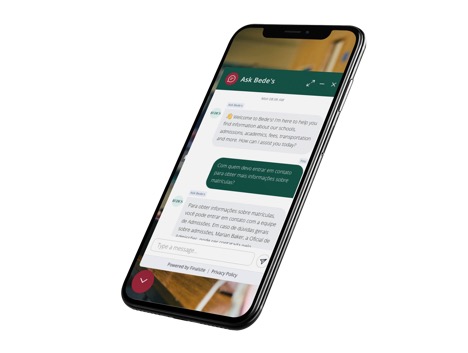
Nowadays, many types of questions can be asked directly to an AI website assistant. Like Bedes, an independent day and boarding school in East Sussex, the school can now engage users in virtually any language to share information about policies, calendars, contacts, and more.
Look for the assumptions behind your messages
There’s no universal model for how an engaged family communicates with a school.
Some parents feel comfortable emailing a teacher whenever a question arises, and others may contact a teacher only when the matter feels serious. Frequent messaging from your school might signal that something’s wrong.
Schools develop their own language over time, too. Abbreviations, traditions, portals, divisions, schedules, and processes become familiar to staff and returning families, while new families arrive without that context.
Consider a message that reads:
Course selection opens Monday. Please submit your choices through the portal by Friday.
A returning family may know exactly what to do, but your newly enrolled family may wonder which portal to use, whether the student or parent completes the form, and whom to contact with questions.
The OECD’s Equity and Inclusion in Education identifies language barriers, unfamiliar school expectations, and differences in families’ educational experiences as possible obstacles to engagement.
With an important message, ask: What would someone already need to know about our school for this to make sense?
A simple sentence of context, a helpful link, or a contact name can make those types of messages easier to understand without making assumptions about individual families.
Consider timing and the channel together
The moment a message arrives and the channel that carries it can shape how families interpret it.
International schools often communicate across time zones, weekends, holidays, and religious observances. Your schools can make expectations easier to understand by explaining when a response is needed and choosing a channel that fits the message.
For example:
- Website: Information families may need to reference repeatedly
- Email or newsletter: Longer updates, explanations, or solicitations
- SMS or push notification: Time-sensitive or high-priority information
- Mobile app: Personalized updates, alerts, calendars, and ongoing access
- Phone or in-person conversation: Sensitive, urgent, or complex topics that benefit from more context
That leads to a helpful communications question: “Are we using the channel that’s easiest for us, or the channel that helps this audience receive and respond to this message?
Consider the communication decisions involved in an unexpected school closure or severe weather event. Families need to know what has changed, whether they need to take action, and where to find more information.
Those messages may reach families who use different languages, observe different routines, or have different expectations about how quickly schools communicate urgent updates.
A consistent communication strategy can help establish which channels carry critical information, how messages are translated, and when families should expect additional updates.
Give families ways to respond and participate
Research on multilingual family partnerships shows the value of serving as cultural bridges and helping families navigate school expectations. Listen through surveys, parent groups, orientation sessions, communication preferences, office hours, or informal feedback.
Your school can ask:
- Which languages do you prefer for school communication?
- Where do you usually look first for school information?
- Which types of messages are hardest to understand?
- How would you prefer to contact the school with a question?
- Are there school processes you would like explained in greater detail?
The answers can reveal assumptions your staff may never have encountered.
Pay extra attention to new families
New families may be learning how your school operates while also adjusting to a different curriculum, city, country, language, or culture. Even globe-trotting families encounter differences from one school to another.
A thoughtful onboarding experience can give them the knowledge returning families have built over time. Think about creating a simple “How Our School Communicates” resource that explains:
- Where announcements and calendars live
- Which messages require action
- How teachers communicate with families
- When families should expect responses
- where emergency alerts appear
- How translation works
- Who to contact with different types of questions
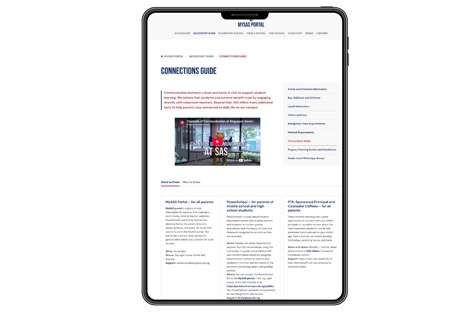
Singapore American School’s Connections Guide outlines almost everything families need to know about the school’s communications, logins, and updates—perfect for new families who need to understand the timing and structure of communications.
Orientation can also give families time to download your school’s app, select language preferences, log into important systems, and see where commonly requested information lives.
Communication data can offer insights into where families may be encountering difficulty. If parents repeatedly ask how transportation works, when applications close, or where to find an academic calendar, that pattern may point to information that deserves more visibility elsewhere.
Add cultural responsiveness to your communication review
Before sending an admissions email, weekly newsletter, emergency notice, or orientation message, ask:
- Can families access important information in their preferred language?
- What knowledge about the school are we assuming families already have?
- Could the timing, tone, or communication channel influence how the message is interpreted?
- Will families understand what they are being asked to do?
- How do we know whether families feel informed, comfortable asking questions, and included in school life?
International school communities bring together families with different languages, experiences, expectations, and ways of engaging with their school.
Strong communication recognizes those differences and can start improving with just a few small choices: explaining an unfamiliar process, offering information in a family’s preferred language, choosing the right channel for an urgent message, or giving parents an easier way to ask a question.
Over time, those choices help families understand what your school is asking of them, feel more confident participating, and know where to turn when they need help.
About the author

Connor Gleason has spent the last decade within the field of marketing and communications, working with independent schools and colleges throughout New England. At Finalsite, Connor plans and executes marketing strategies and digital content across the web. A former photojournalist, he has a passion for digital media, storytelling, coffee, and creating content that connects.
Learn more about how Finalsite can support your school.
You might also like...
The Language Gap: Why Your School’s Mental Health Investments Aren’t Working
2nd April 2026
A Programme for Nobody
20th October 2026
Hidden in Plain Sight: School Culture’s Unspoken Truths & Bold Fixes
4th November 2023
AI & Back to School: The terms you agreed to over summer
12th May 2026
How do we evaluate the impact of CPD?
5th December 2023