
From Awareness to Action: Building Student Leaders Who Create Safer Communities
From Awareness to Action: Building Student Leaders Who Create Safer Communities
Veronica McDaniel, Secondary Teacher, @Atlanta International School | Executive Director International Student Initiatives, Street Grace
When a student stays after class with one more question, sends a follow-up email, or creates a club and asks you to supervise, we have done something right. Any connection point with our kids is a win when we want to get through to them that we care.
When the topic is human trafficking and human exploitation, those conversations hit differently. When a student comes up to us asking how they can help, or someone admits, “I didn’t know this was happening” then we know those connections are real and helping to keep our students safe.
Students are shocked that exploitation exists in every country, every community, and increasingly within the digital spaces they navigate every day. One of the first instincts I have encountered when working with kids is action. I was totally struck when I received an email from a high school student who traveled two hours by school bus along with 20 of her peers to attend a youth summit I organized. After she got home she emailed me the following:
“I’m a senior in Columbus, GA. My IB English class traveled to Atlanta for the Confronting Trafficking in our Classrooms seminar, and it lit a fire under my seat. I was only acutely aware of the impact that trafficking has on kids around my age, and I had no idea that it was so prevalent in the Atlanta area. In the breakout sessions following the seminar, I spoke to several middle and high school students from a school that has a student-led club. Our community truly needs something similar that provides both students and parents with information to help keep themselves safe. I would love to form something at my school and/or the surrounding schools to bring awareness to the issue and encouragement for how to help survivors. If you have any advice as to how to get the ball rolling at my school, that would be incredibly helpful! This issue is so important and I feel a huge pull to do something about it.
That seminar got the gears in my head turning, and I’m very thankful to have had the opportunity to hear the panel speak and learn more about what’s happening in my community.”
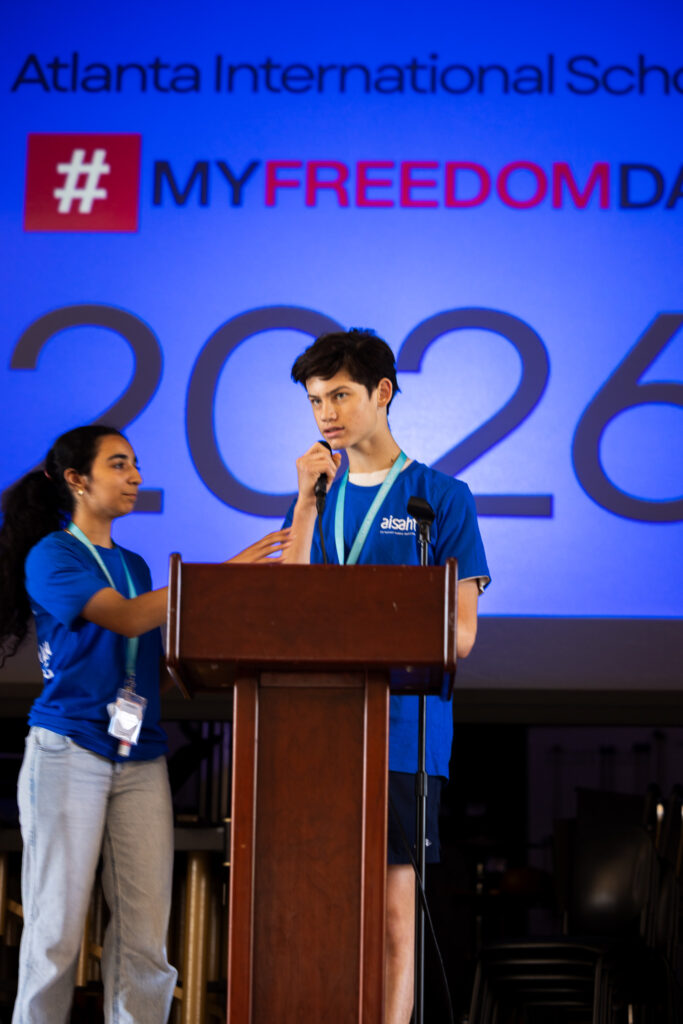
For years, as a teacher facilitator, community organizer, and teacher, while supporting the leadership of high school students, I helped answer the question “what can we do?” by planning activities inside our own community, awareness campaigns, and service projects. Those experiences made an impact. They helped students and their peers understand one of the world’s fastest-growing criminal industries while developing empathy and global awareness about supporting ethically sourced goods, knowing the signs if someone is being groomed, how to report, and more.
Over time, I have not only realized the importance and the effect peers have in keeping each other safe and the power of unity in a movement on a global scale, but have become devoted to promoting that powerful peer guidance.
What started with awareness-raising turned into action and engagement. Leadership and confidence building are what create change, not knowledge sharing alone.
Impact isn’t made by just students who know about human trafficking and exploitation and study terminology, laws, and headlines. The students who learned how to collaborate, facilitate conversations, organize peers, explore their curiosities, advocate responsibly, and sustain momentum long after the awareness week had ended are the ones who have grown this global student movement. Growth is a year-round, sustainable effort that cultivates a pipeline of passionate students, with mentors inspiring younger students and showing them what’s possible.
That realization transformed my work. Instead of asking, “How do we encourage students to learn about human trafficking?” I began asking, “How do we prepare students to become leaders who can address complex global challenges, and give them the confidence to share their knowledge and help keep those around them safe?”
In 2022, after working alongside students at my school, Atlanta International School Against Human Trafficking, and CNN Freedom Project’s #MyFreedomDay, I created a nonprofit called FREEST to confront human trafficking by activating students and educators worldwide in order to meet the vision of a world with an empowered global student network taking action against human trafficking in their community. In January 2025, we officially merged with Street Grace to lead this work and created Street Grace International Student Initiatives.
There, we published the Student-Led Group Guide Playbook to help students and educators create groups and take action within their respective school communities. One student, Megan, states: “When I first started working with my school to take action against human trafficking, I had the passion but needed the direction. The Street Grace Playbook gave me exactly that. It helped me better understand the issue, develop goals for my organization, plan meaningful events, and find ways to get other students involved. More than anything, it showed me that students have the ability to make a real impact when they are given the right tools and resources.”
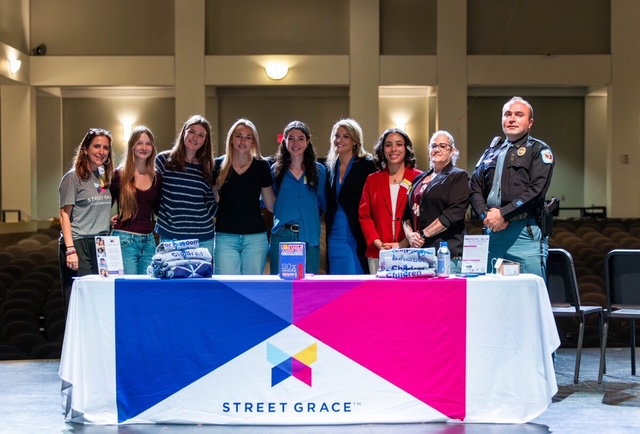
The Playbook was a direct response to their Youth Leadership Academy (YLA) Online, a perfect fit for what I had been moving towards for over 17 years.
Rather than another awareness course, YLA was designed as a leadership experience. Students from different countries move beyond learning about exploitation to developing practical leadership skills they can immediately apply within their own schools and communities. They examine ethical decision-making, responsible advocacy, systems thinking, collaboration, and project design, all through the lens of creating safer communities.
The program being put into an online format has become one of its greatest strengths, specifically for our International School community.
International schools by nature are expected to understand that meaningful learning is enriched by diverse perspectives. Bringing together students across cultures allows them to discover that while trafficking looks different around the world, many of the vulnerabilities are the same. Students learn with one another, challenge assumptions, and begin seeing themselves as members of a global network of young changemakers.
Two seniors in high school in the USA commented, “It was so easy to complete, and I learned so much in 40 minutes. The training was so useful that I will be applying it in my life,” and “The Street Grace Youth Leadership Academy gave me the knowledge, confidence, and tools to turn my passion into action. It showed me that young people can make a real impact when we have the right resources, support, and opportunities to lead.”
One way students learn together is through a partnership between Street Grace and the International Baccalaureate’s Generation Global #MyFreedomDay Dialogues. According to Generation Global, in 2026 these Dialogues welcomed 320 students from 23 countries to explore human trafficking in a safe and inclusive space. Conversations covered how factors like culture, nationality, gender, and social background shape understanding of trafficking, the risks faced by children and vulnerable communities, and the role of transparency and accountability in protecting victims.
Yet leadership development should never end with a one-off, once-a-year training or online module alone, or schools and students working in silos.
Learning becomes meaningful only when students return to their own communities ready to act.
That is why the Youth Leadership Academy intentionally connects with the Student-Led Guide Playbook, a practical resource designed to help students move from ideas to implementation. Rather than prescribing a single project, the playbook encourages schools to create initiatives that reflect their own context, culture, and student interests.
Some schools begin with awareness campaigns. Others organize peer education workshops, ethical consumption initiatives, community partnerships, policy advocacy, or annual action events. Regardless of the activities they plan and take part in, students own the work. Adults mentor, encourage, and create opportunities, but students lead.
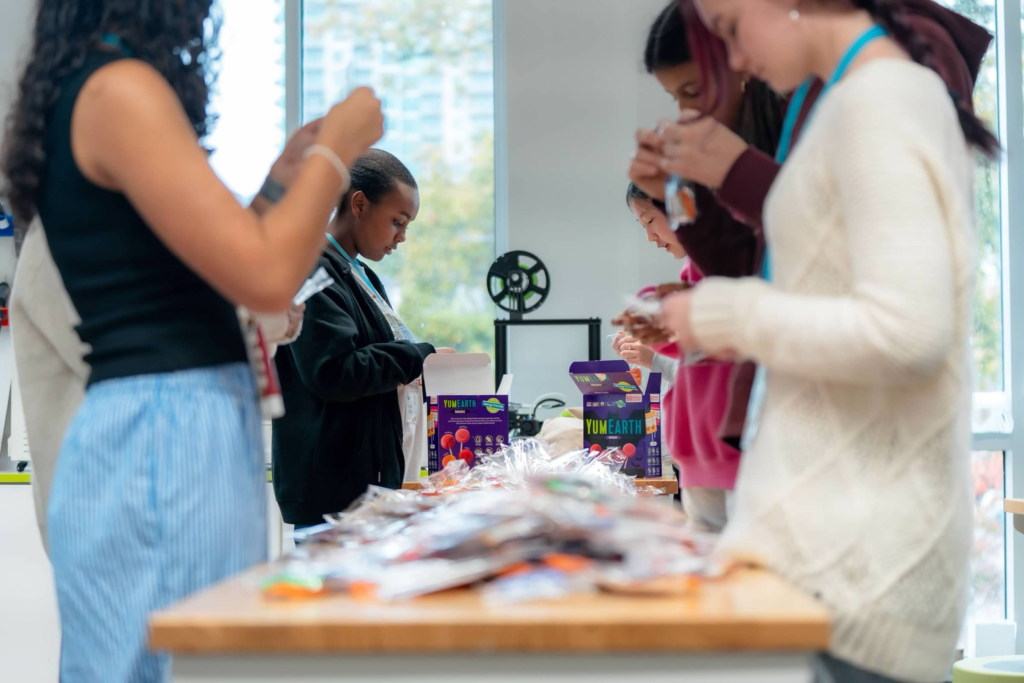
When we intentionally develop student leadership and create space for students to project-manage events for good, things get done! Students become more effective collaborators; they communicate across cultures; they practice ethical leadership, critical thinking, project management, and civic engagement: competencies that extend far beyond any single issue.
The issue of human trafficking becomes the avenue through which students recognize the power of their own agency to drive positive change.
The greatest lesson is that preventing exploitation is not solely about protecting young people; it is also about empowering them.
When students believe they have the capacity to influence their communities, they become more than learners. They become leaders who recognize injustice, respond thoughtfully, and inspire others to do the same, resulting in one of the most valuable outcomes education can offer.
Resources:
Street Grace Resources are to be used in school at any point in the year:
- Youth Leadership Academy: A free, one-hour online course that empowers students to build confidence, strengthen their leadership skills, & take action to help prevent human trafficking. Students receive a certificate of completion & verified service hours.
- Student-led group Playbook & Ethical Consumption Guide: a year-round event planning guide for students and educators, & a guide to ethical brands that prioritize responsible sourcing and worker welfare.
- Fill out this Form to join the International Student Initiatives Network for updates.
- Follow @streetgrace and @streetgrace_studentinitiatives
- Survivor leader, advocate, and author Rebecca Bender’s book In Pursuit of Love: One Woman’s Journey from Trafficked to Triumphant.
- Deepa Iyer’s Social Change Map is a framework that helps students recognize that there is no single way to be a changemaker. By identifying different roles within a movement, it empowers young people to discover how their own strengths and passions can contribute to lasting social change. I use this Map to help students see that meaningful change happens when people contribute their unique strengths.
- 24 Hour Race: Empower students to organize a youth-led endurance race that raises awareness and funds to combat human trafficking. Students develop leadership, entrepreneurship, and event-planning skills with mentorship from the 24 Hour Race team.
School Activities & Opportunities 2026-27
- September 11-13, 2026,Street Grace Demand an End Virtual 5K
- Join a global virtual race to raise awareness about human trafficking.
- Walk or run anywhere during race weekend; invite classmates, teams, clubs, and friends.
- Free student registration using promo code STUDENT2026.
- Share participation on social media using #StreetGrace5K and tag Street Grace and Street Grace Student Initiatives.
- October 1, 2026,A21 Global Freedom Summit
- Engage students in a global conversation focused on ending human trafficking.
- October 6-12, 2026, Girls Day Dialogues
- Participate in international student dialogues through Generation Global and the International Baccalaureate.
- November, Street Grace Volunteer Opportunity
- Georgia students can volunteer with Street Grace for an evening featuring Ernie Johnson and Jeff Foxworthy.
- December,Dressember Campaign
- Partner with Dressember Foundation and International Justice Mission.
- Wear a dress or tie throughout December to spark conversations about human trafficking and raise funds to support survivors.
- January, National Human Trafficking Prevention Month
- January 11, 2027, #WearBlueDay: Wear blue, share photos, and tag @DHSBlueCampaign to support the Department of Homeland Security’s Blue Campaign.
- March 11, 2027 (Tentative)#MyFreedomDay
- Join CNN Freedom Project’s global, student-led day of action against modern slavery.
- Connect students with peers around the world through awareness activities and international dialogues on modern slavery and digital safety.
Veronica McDaniel has worked in education for two decades. Born in France and half-Colombian, and with an International Baccalaureate bilingual diploma, she is trilingual in French, Spanish and English. In 2009 at Atlanta International School, she started facilitating a student-led anti-human trafficking group called AIS Against Human Trafficking. She is the teacher liaison for CNN Freedom Project’s #MyFreedomDay where she coordinates schools annually for a global day of action. #MyFreedomDay has resulted in 2 billion social media impressions per year, with students from over 140 countries taking part. She recently created the nonprofit FREEST, whose mission is to confront human trafficking by activating students and educators worldwide. FREEST recently joined forces with Street Grace where she is now Executive Director of International Student Initiatives. She lives in Atlanta, Georgia, with her husband Mark, kids Lana and Mateo, and dogs Jasmine and Georgie. When she isn’t working with students and educators, she spends time going to her children’s sporting events, running, paddleboarding, fishing, and hiking.
You might also like...
International Coach “State of the Industry” Survey 2023
20th November 2023
More Connected Than Ever
4th June 2026
Why Does Student Voice Matter in the Curriculum?
21st November 2023
Building Shared Mental Health Literacy in Schools
23rd June 2026
Leading through Complexity: Why Wellbeing Intelligence is The Bedrock of Sustainable Success
30th April 2025