
Empowering Every Voice: Conceptual Teaching in Multilingual Education
Empowering Every Voice: Conceptual Teaching in Multilingual Education
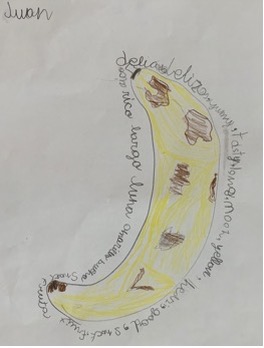
(Images from The International School of The Hague, Primary)
Educational training, or any professional development, is always an exciting opportunity for teachers to learn new ideas, and make changes to their teaching programmes and practices. Often these CPDs address one aspect of learning, curriculum area, or a specific teaching practice. Do this, trainers will say, and it will work. This is a typical motto.
However, teachers are often left with a scenario of having to fit multiple different strategies, approaches and curriculum changes into their already busy schedule, leading to creating yet another layer on top of all of these already very important areas of teaching and learning. This is especially the case when ideas are presented from a monolingual teaching perspective. Highly effective teaching practices that are developed in a monolingual context, e.g., an ‘English only’ school setting in an English-speaking country, like the UK, USA, Australia etc. may produce a completely different learning outcome when the context changes to a more linguistically diverse setting.
In this kind of learning scenario, teachers need to make critical decisions about what stays, what goes, what should continue in their teaching practice, and where new ideas can be added to their curriculum. Later on, they might also find out that after replacing one practice with another, what was previously reduced or abandoned was actually also important going forward.
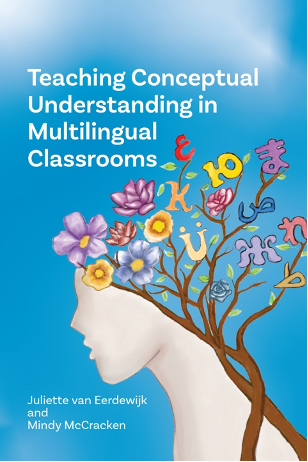
When we started writing our book ‘Teaching Conceptual Understanding in Multilingual Classrooms’, the driving force was to find a way to show educators that it was important to develop a strong, intellectually challenging curriculum. We wanted to showcase teaching practices that could enable language learners to reach a depth of understanding that matched their intellectual abilities, not just their linguistic abilities. Our book intertwines both curriculum and dynamic teaching practices through providing a thorough understanding of the theory and the related practical implications of inquiry and language teaching in order to provide the intellectual challenges that language learners deserve.
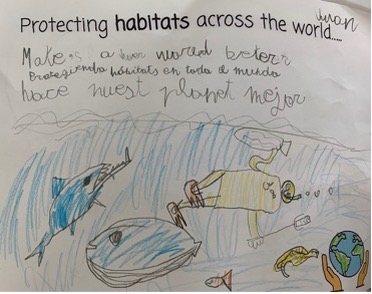
However, that is not an easy task and so our book combines educational theories, related practices and explores the hurdles that arise with weaving these new ideas into teaching. The complexity of this process must not be underestimated, which is why we approach learning from multiple directions:
1. How the brain works leading to effective learning strategies
2. Inquiry curriculum structure and rigour
3. Unpacking specific language learning theories and supporting linguistic teaching practices
4. Creating powerful links and connections within these different disciplines
Working with the underpinning models of conceptual learning from Lanning and Erikson (2014; 2017), we explore the inquiry phases of Marschall and French (2018) creating a rich resource bank of explicit English scaffolding and home language connections teachers can easily use. These flexible scaffolds are meant to strengthen multilingual students’ conceptual understanding, while removing any language barriers that may be preventing access to the inquiry process.
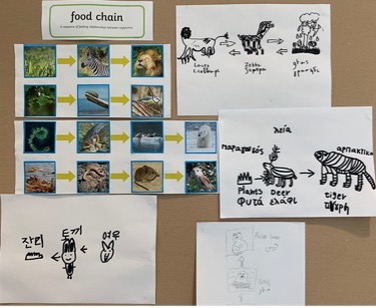
Additionally, we examine numerous ways of enriching EAL student production of academic English language through specific skill building. This takes place in areas like the research and note taking process, concept formation, generalizing, as well as through the many layered comparisons that can be made between students’ English and Home Language systems.
Examined through the lenses of translanguaging and additional language theories, we provide a combined inquiry-based, linguistic pathway for multilingual students to use in order to develop both their conceptual understanding and linguistic skills to higher levels. Formative assessment tools, AI use, student work and video examples of teaching strategies in action are also highlighted in this very practically-oriented book. Our core aim is to strengthen the deep thinking of multilingual students through the development and usage of their whole linguistic repertoire. Depth of thinking is also reached with the regular use of structured, skill-based language teaching.
We also share our personal multilingual, change journeys and maximise these as a springboard into thinking about bringing powerful, educational change into other settings. Here we want to equip educators with the knowledge, tools and mindset to bring about educational change in manageable steps, suitable to different contexts from the leadership level on down. We encourage educators to think about problems of practice that may arise in concept-based instruction, both individually in the classroom and wider, on a school-based implementation journey. We share what we have learned going through similar struggles ourselves, providing useful suggestions and ideas to trial along the way.
Our lived expertise, alive in those pages, comes from having had the great privilege to work with and among some real changemakers in international education. Being in schools where we could innovate and trial new, merged approaches has made all the difference to our current teaching perspectives and practices today. We witnessed the progress that multilingual students can achieve first-hand.
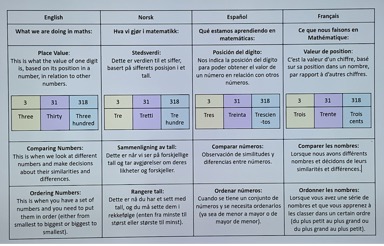
By promoting teaching that enables translanguaging to happen, encourages bilingual reading and writing, or the use of multilingual displays and multicultural books, we invite educators to join us on the same educational, change journey. The suggested adaptations we share are both easy to implement and can have a big impact on multilingual students’ outcomes. It is our position that everyone should have the opportunity to be successful in achieving their full learning potential. We hope that by making strong curriculum design choices and providing students with sound linguistic practices that are adaptable to any context, everyone will find a way forward with thousands of other dedicated educators around the globe.
 Most importantly, we hope to inspire a passion and determination within educators to become a changemaker in the field of education. We encourage all educators to challenge themselves, and their colleagues, to unlock every student’s full potential, regardless of the language they speak or their past experiences. All students can think conceptually!
AUTHORS
 Juliette van Eerdewijk – Consultant and trainer at Visionary Educational Training and Consultancy
 Mindy McCracken – Primary EAL Leader and educator, TESMC Trainer, Former ECIS MLIE committee member
Teaching Conceptual Understanding in Multilingual Classrooms publishing date is 12 May 2026, via the publishing company Multilingual Matters.
REFERENCES
Erickson, H., Lanning, L. (2014) Transitioning to Concept-Based Curriculum and Instruction. Thousand Oaks, CA: Corwin.
Erickson, H., Lanning, L., and French, R. (2017) Concept-Based Curriculum and Instruction for the Thinking Classroom. Thousand Oaks, CA: Corwin.
Marschall, C., and French, R. (2018) Concept-Based Inquiry in Action. Strategies to Promote Transferable Understanding. Thousand Oaks, CA: Corwin.
You might also like...
Reflections on an Unusual Admissions Season: Are We Seeing More Girls on the Autism Spectrum? What are You Seeing?
4th November 2023
Sustainable Leadership through Altruistic Mentoring
29th July 2024
Artificial Intelligence in Education: Answering the frequently asked questions
22nd August 2024
From Awareness to Action: Building Student Leaders Who Create Safer Communities
27th August 2026
The Future is Multilingual: Why International Schools Need a New Language Mindset
24th August 2026